Author Archive

UK EAPA Annual General Meeting 2025

Written by Carly on . Posted in Events

The 26th Annual General Meeting of the UK Employee Assistance Professionals Association will be held on Friday 20th June 2025 at 9am.

The AGM will take place online via Teams. Please register to attend by email to info@eapa.org.uk.

The following Officer roles are available for a 2-year term:

  • Chair
  • Vice-Chair
  • Treasurer

There are six Board roles available this year and anyone seeking election will need to choose if they are standing for a 2-year term position or 1-year term position.

Members may nominate themselves by submitting the Board Nominations Form and Board Member Commitment Form to info@eapa.org.uk. Only one person employed by or representing any organisation can become an Officer or Board Member.

Nominations must be received by 9am on 6th June 2025.

How sickness absence is affecting the life of workplaces

Written by Carly on . Posted in News

More than half of employers in a new survey have reported that higher levels of sickness absence had led to lower productivity.

The research among 233 UK employers by the Recruitment and Employment Confederation (REC) also found that absence had caused a decline in the quality of overall services being delivered by the organisation (36%); a fall off in the levels of employee morale (31%); and a negative effect on financial returns (26%).

Latest figures have confirmed how the UK has struggled to keep people in work, whether in terms of long-term or short absences. The TUC recently reported that the number of working days lost to work-related ill-health has risen by a third since 2010 (34 million days lost in 2023-2024, compared with 22 million in 2010). The most common causes are now said to be stress, depression and anxiety

In terms of a response to the problem, 51% of employers in the REC survey said they were introducing flexible working arrangements; 40% were enhancing training and guidance on workplace health and safety; 37% were providing better education on general health and wellbeing; by comparison only 30% were investing in employee assistance programmes, counselling, and mental health support.

EAPA UK chair, Karl Bennett said: “We need to do more to make work and workplaces a source of positive wellbeing and not the opposite. Too often it seems that the pressures of work, the design of jobs, the stress of targets and forms of management, only generate a spiral of unease and ill-health. And that leads to a culture of stress and sickness. Offering more flexible working and education on wellbeing won’t have any effect because they don’t help deal with underlying problems.

“EAPs provide essential professional support for helping people actually face up to the roots of issues and find workable solutions, and not allow problems to build and accumulate. In the same way HR and management need to be making sure they are working with their EAP partner to identify trends and issues in particular areas of the organisation and taking action on employee experience and culture.”

UK EAPA are proud to support the Watercooler Event

Written by Carly on . Posted in Events

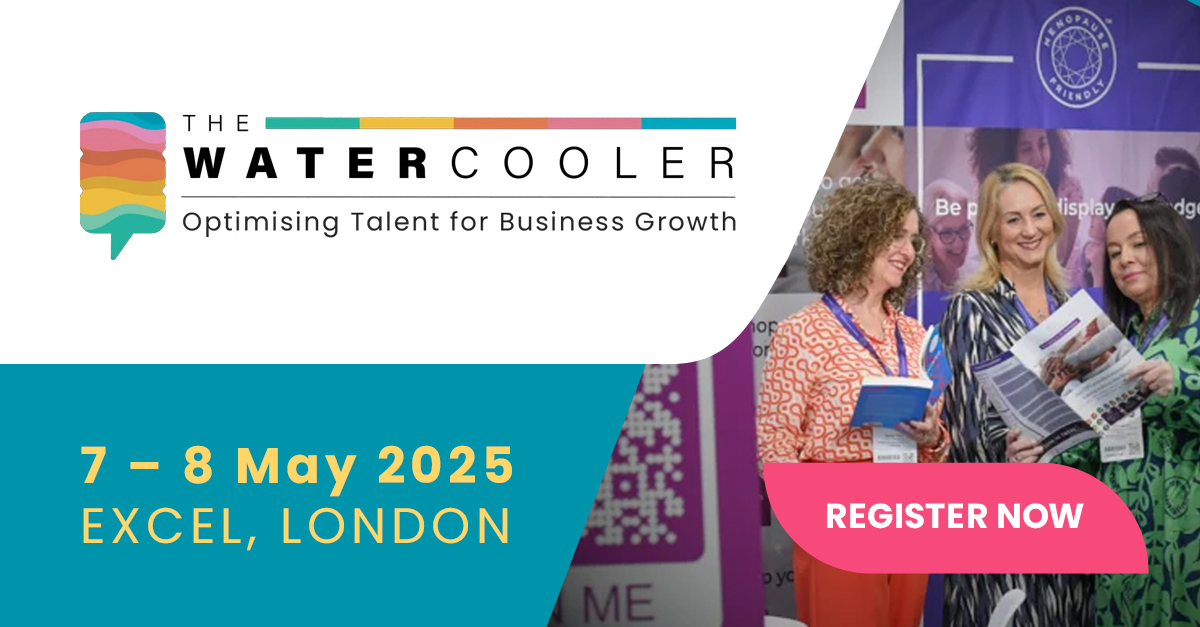
UK EAPA are proud to support the Watercooler Event, 7 – 8 May, ExCeL, London.
This event brings together the leading luminaries on workplace culture, employee wellbeing and mental health excellence.


The exhibition and high-level conference will shine a light on best practice, real-world
examples, and provide a strategic roadmap to foster a psychologically safe workplace where all employees can thrive.


View the full agenda here: https://bit.ly/3QzPG1s

What happened to the ‘right to switch off’?

Written by Carly on . Posted in News

The consultation period with business groups over the new Employment Rights Bill has led to the ‘right to switch off’ from contact outside of work hours being removed from the latest version.

Originally, the new protection for employees had been part of the Labour Party’s manifesto, with the government aiming to follow in the wake of countries like Ireland, Belgium and Australia in providing more clarity of when staff should be engaged in work duties. It had been argued that the measure would prevent the blurred lines between home and work lives, prevent presenteeism and improve productivity.

Commentators have suggested that at a time when organisations are being asked to contribute more via National Insurance contributions and the National Minimum Wage, employers still want to be in a position to ask for more in return from their people.

Leaving out-of-hours working as a grey area will continue to be a problem for employee health, say others: not formally acknowledged as overtime, but still expected. A research report by Owl Labs last year suggested that only 20% of employees felt comfortable with challenging after-hours requests.

EAPA UK chair, Karl Bennett said: “There’s no evidence from the recent decade or more of digital working, with smartphones acting as a constant link with workplaces, that people have benefited in terms of their experience, their levels of stress, burnout and overall mental health. And in turn, where’s the evidence that the blurring between work and home has led to increases in engagement, motivation and productivity?

“So while it’s reasonable for employers to want to avoid limits on the contribution from their staff, they should be looking at the bigger picture of wellbeing and productivity. We know that when people feel out of control of their work routines, it’s a recipe for stress and burnout. Those feelings can’t be patched up with wellbeing benefits or access to professional services from an EAP — employers need to recognise how everyday work routines and job design affect people. A ‘right to switch off’ would be a clear signal that employers acknowledge the importance of balanced lives and wellbeing.”

Revealed: why the UK is among the worst performers in Europe for workplace health

Written by Carly on . Posted in News

Looking at data from 14 other European nations, the UK’s workforce has one of the highest rates of long-term ill-health and disability. Around one in five people of working age have ‘health limitations’.

The research, carried out by the Institute for Employment Studies, highlights the critical role of the Covid-19 period in changing the picture of employee health. Between 2018 and 2022, the likelihood of people aged 16-24 with ill health being out of work more than doubled. The number of workers aged 55-64 being out of work also increased, while in most other European countries the figures fell.

The research authors call for a package of integrated measures to help people to stay well while in work. Recommendations include more limits on working hours, incentivising employers to demonstrate improved workplace health, increasing levels of sick pay (linked to individual wages), improving OH services, adaptation grants for workplaces and greater access to expert advice around wellbeing at work more generally.

EAPA UK chair, Karl Bennett said: “The UK has, for some time, suffered by comparison with other nations when it comes to getting people with long-term health conditions to get back into work — the kinds of work that can be so important in supporting wellbeing, through providing both financial rewards and a sense of belonging and fulfilment.

“The pandemic years have clearly only exaggerated and exacerbated some of the inherent problems in workplaces. We need more recognition for what makes for the essentials of ‘good work’: not quick fixes, but clarity on what really makes a healthy workplace; what that means in terms of job design and management methods, and which services are best placed to deliver in which circumstances.”

Time to split ‘wellbeing’ and EAPs

Written by Carly on . Posted in News

At some point in the employee wellbeing revolution, having a wellbeing strategy and having an EAP has become synonymous.

When organisations are asked about what it’s doing for employees, they’ll now often just point to their EAP provision: the ‘catch-all’ and ‘fix-all’ for wellbeing. Reports indicating high levels of EAP usage are used as evidence of the success of awareness-raising and access to wellbeing support.

On the one hand, it’s a tribute to the impact of EAPs. Employers trust the professionalism of their EAP provider. But the shift in attitudes has had a serious effect on the ability of EAPs to focus on core strengths, the quality of clinical services and delivering the best clinical outcomes. Seeing the EAP as a holistic wellbeing solution has meant demands on providers to deliver an umbrella service, to provide services in everything from financial wellbeing to menopause advice. So EAPs have needed to invest and develop in areas well outside of their area of expertise.

The blurring of wellbeing means a bigger problem for the market, organisations and employees. The reality is that EAPs are only signposted and used as a reactive service when there is already an issue, and more often a serious one involving mental illness. A rise in EAP usage isn’t a sign of successful wellbeing strategies, but their failure.

Wellbeing support isn’t an EAP, it should be there, everywhere, in different forms, before any kind of crisis point is reached; a proactive strategy that includes advice and help around issues like sleep, diet and nutrition, good mental health — and perhaps most of all, in terms of job design and workplace culture, what makes for ‘good work’ to maximise feelings of belonging and minimise the stress and angst.

Maybe it sounds like an odd message from the chair of EAPA UK: don’t spend your entire wellbeing budget on an EAP. But we need to be clear about what EAPs and EAP providers are. They were set up to have a positive effect on the mental health of the workforce, for employers and employees, and not as a profit-making scheme.

This kind of integrity and viability can only happen if EAPs are able to keep to their fundamental purpose and role, focused on positive clinical outcomes for individuals who reach out to the service.

Karl Bennett, chair, EAPA UK (Employee Assistance Professionals Association), www.eapa.org.uk

The Watercooler (7-8 May 2025, Excel, London)

Written by Carly on . Posted in Events

With more employees reaching out to EAPs for support with complex health and wellbeing needs and employers increasingly calling for an evolution in the services that EAPs provide, this exhibition and conference is a must-attend event for EAP professionals. The insights shared by industry leaders will empower you to shape the future of your EAP’s services, enabling you to stay ahead in the rapidly evolving world of workplace culture, employee health and wellbeing.

Conference Agenda

This year’s agenda is packed with critical discussions, case studies, and expert panels that will directly impact the future of EAPs.

We have leading speakers from across the UK from NHS, CocaCola, National Grid, E-On, Ericsson, United Airlines, Yelp et al.

View the speakers  – https://bit.ly/43kFJMT

Key Learning Points from the Conference include:

  • The Future of Employee Assistance Programmes (EAPs)
  • Proactive Approaches to Supporting Global Employee Mental Health & Wellbeing
  • Practical Applications of AI in workplace health and wellbeing

Join the Conversation

Stay ahead in shaping the future of employee wellbeing—register now! https://bit.ly/43beYdP

Join over 4,000 of the UK’s leading wellbeing decision makers.

Watercooler – ExCeL, London – 7 – 8 May, 2025

Register Today – https://bit.ly/43beYdP

Membership categories

Written by Carly on . Posted in News

EAPA UK has been working on reducing the number of membership categories, making the application process clearer and easier, and to reduce the need for more requests for information later.

  • Accredited Provider
  • Non-Accredited Provider
  • Consultant Member
  • Specialist Benefit Provider
  • EAP Organisational & Support Services Provider
  • Professional Body Member
  • Individual Member – EAP Specialist: Clinical
  • Individual Member: Non-Clinical
  • Student Member
  • Accredited EAP Provider
  • Registered EAP Provider
  • Associate Organisational Member
  • Individual Member
  • Individual Member (Student or Lifetime)

Dr Adrian Wright, Director of iROWE and Associate Dean at UCLan (University of Central Lancashire): How ‘good work’ matters more than traditional health benefits

Written by Carly on . Posted in News

Work plays a major part in moulding people’s health — in both positive and negative ways. The question is how employers can ensure they’re more often a beneficial force.

Our research at the Institute for Research into Organisations, Work and Employment (iROWE) looked in detail at the experiences of a cross section of over 200 local workers from across a mix of sectors in Lancashire. Worryingly, the headline finding was that more than half of these employees reported that their work had either caused or made feelings of stress, anxiety or depression worse in the previous 12 months.

And this was happening in spite of efforts by employers to support health and wellbeing. 82% of employers had active health and wellbeing measures in place; and half of the workers had made use of them. It’s further evidence of how the focus on employee health offerings over the past decade has failed to address the core issues around employee wellbeing.

The survey results pointed to what might be the root causes: 70% of the employees said they needed to work longer than their contracted hours; only one in three said they could get their work done inside their normal hours. At the same time, just 55% of people felt they were fairly paid. There was also evidence of issues with short-term contracts, which in turn would be affecting retention and productivity.

But there’s another side to people’s relationships with work — demonstrated by the importance of employee’s feelings of job security and the relationships formed with co-workers. There are still fundamental qualities to the work experience that people value strongly and that provide an important basis in terms of employee motivation and their wellbeing.

The research re-affirmed the need for attention towards formulation, implementation and communication of health and well-being policies ensuring there are clear links between policy, procedure and practice. We set out a list of priorities for both employers and policymakers: including the need to re-focus on people management and providing support for line managers, prioritising ‘good work’ and factors such as pay and benefits, job design, nature of work, training and development, and employee voice; review existing policies to ensure they support staff health and wellbeing (mental health, grievance and disciplinary); encourage managers check in with their employees proactively and consider how the needs of employees can best  those of the organisation when it comes to sustainable and productive work, embracing flexibility.

Our EAP: Tunai Musa, HR Manager at Passmores Co-operative Learning Community (PCLC)

Written by Carly on . Posted in News

We’re a multi-academy trust managing six schools in the Harlow area of Essex, including around 600 staff to support and look after.

As with most employers, wellbeing has become more and more of a priority — and we were aware of more cases of staff struggling with both physical and mental health conditions. No matter what kind of role you’re working in, education is a fast-paced and stressful environment, it can be relentless for people.

Our EAP, which was introduced five years’ ago, has been an important way for us to differentiate ourselves as an education employer in the region. We can say “come to work with us and we’ll care, we’ll support you”. And you can see how it works, when employees join they’re impressed by the range of offerings the EAP includes, and it helps them feel like they’re part of a community.

Mostly our employees want to use the physio and counselling offerings. In these cases the real value comes from how promptly sessions can be arranged: you can get something booked within 48 hours and know you’ll be having a face-to-face appointment for physio or counselling for the following week. And that makes a real difference for people — they can avoid the long waiting times involved with the NHS or the costs of having to arrange their own provider, meaning less worry, issues are dealt with far more quickly, and there’s less potential for needing more or longer periods of absence.

We also try to be flexible around how the EAP is used. So if a member of staff has used up all of the three sessions usually available to them, they can get in touch and we can look to arrange further sessions. People can even make those appointments for during work hours if they need to, and we’ll support them to do that. We’ll often get emails and feedback saying it’s been very beneficial for their mental health, telling us how it’s helped them along with their journey back into work. From an organisational perspective, the EAP is a very practical and important platform for reducing staff absence and avoiding long-term absence situations which are no good for them or us.

Awareness is always the challenge. There’s so much to take on-board, when people join and then becoming absorbed into their day-to-day roles, so the EAP can get forgotten. We’ll always flag about the EAP when we have catch-ups and one-to-ones, but in the end it’s always down to the individuals to remember the offer and be willing to share an issue.

Contact EAPA

EAPA are pleased to accept your questions about the EAP industry. Please use the Contact us page or the form here.

Contact Form